
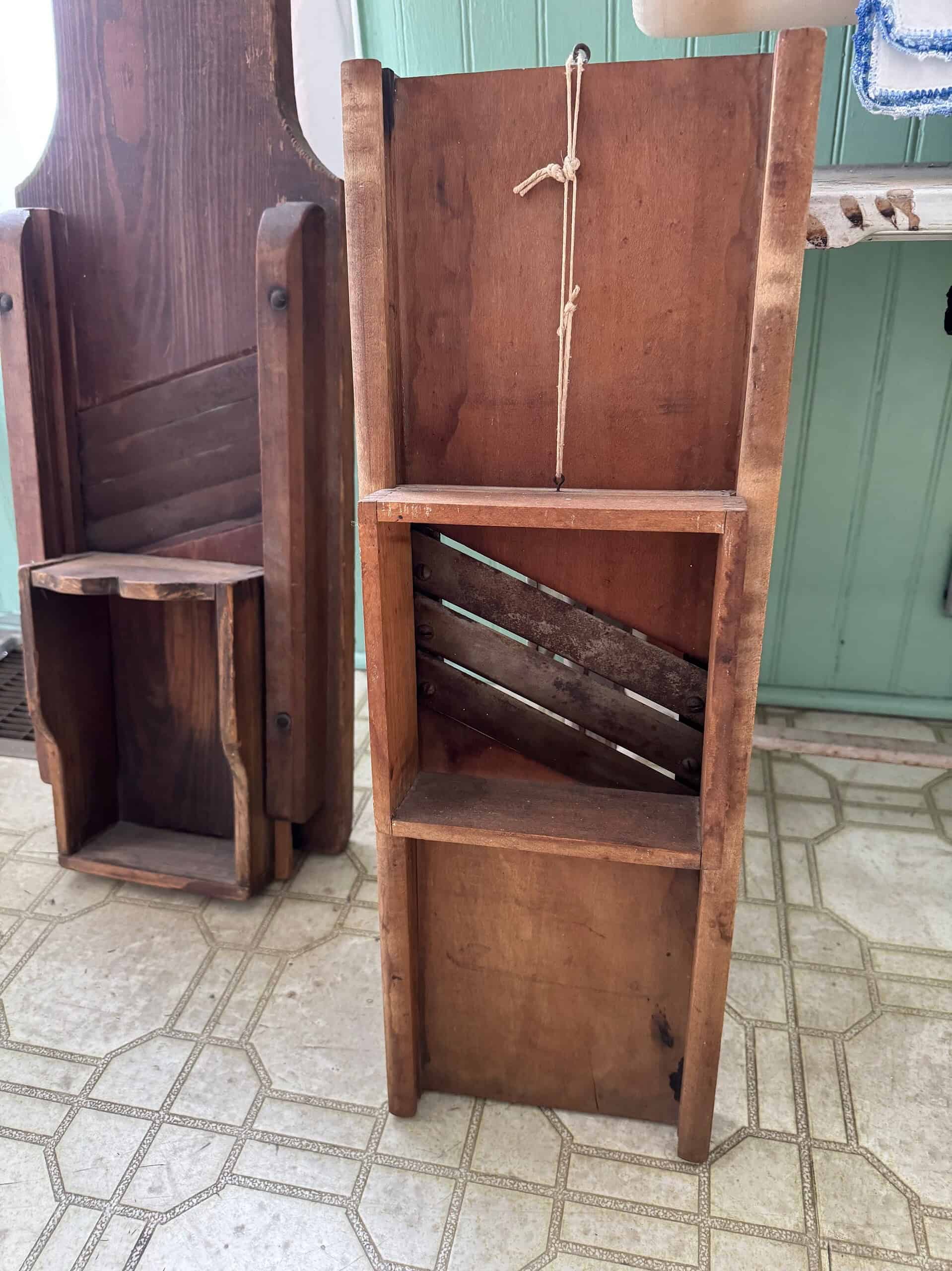
For pioneer families, food storage was a significant challenge. One staple found in many kitchen larders was sauerkraut, made with sliced cabbage and salt. The Hernando County Museum’s May-Stringer House, 1885 Brooksville Depot, and Countryman One Room Schoolhouse demonstrate how sauerkraut was made in a crock or jar.
The process began by spreading outer leaves of cabbage at the bottom of a 10 or 20-gallon crock. Then, heads of cabbage were shredded, salted, and layered in the container. The cabbage had to be tamped down to release its liquid and mix with the salt. Once the layers of salted cabbage were complete, more outer leaves were added to the top, followed by a plate and a weight, such as a quart jar of water. The sauerkraut was ready after one to four weeks.
The museums offer a glimpse into the past with their exhibits and demonstrations. The May-Stringer House offers tours Tuesday through Saturday at 11 a.m. and 3 p.m. The 1885 Brooksville Depot offers tours Friday and Saturday at noon and 3 p.m. The Countryman One Room Schoolhouse offers tours Friday and Saturday at noon and 3 p.m.
Visitors can learn more about pioneer life and food preservation techniques at these museums. For more information, call the May-Stringer House at 352-799-0129, the 1885 Brooksville Depot at 352-799-4766, or the Countryman One Room Schoolhouse at 352-515-3054.
Originally reported by Hernando Sun
Sources: Hernando Sun