
On June 1, 1539, Hernando de Soto landed near a native village at the head of Charlotte Harbor, beginning his historic expedition. Commissioned by Charles V, the King of Spain, de Soto took formal possession of La Florida on June 3rd, “…and all that was connected to it – today’s North America.” This accomplishment made de Soto and his men famous as the first European expedition to explore the interior of the North American continent.
Charles Enloe Moore, author of “The Long Road to Mabila,” revealed that Spain’s quest for gold largely pushed the de Soto expedition throughout 14 future states of America. Along that trek of some 4,000 miles, Moore explains the diaries from this expedition have given historians an early account of life in the eastern parts of the United States. De Soto’s ambition was to find gold as quickly as possible with 620 men and 223 horses. The expedition also included a party of “knights, artisans, wives, war dogs, priests, boat builders, servants and cattle.” It is also most likely that wild pigs currently found in Florida are descended from the large herd of pigs that was also a part of the de Soto expedition, according to Moore.
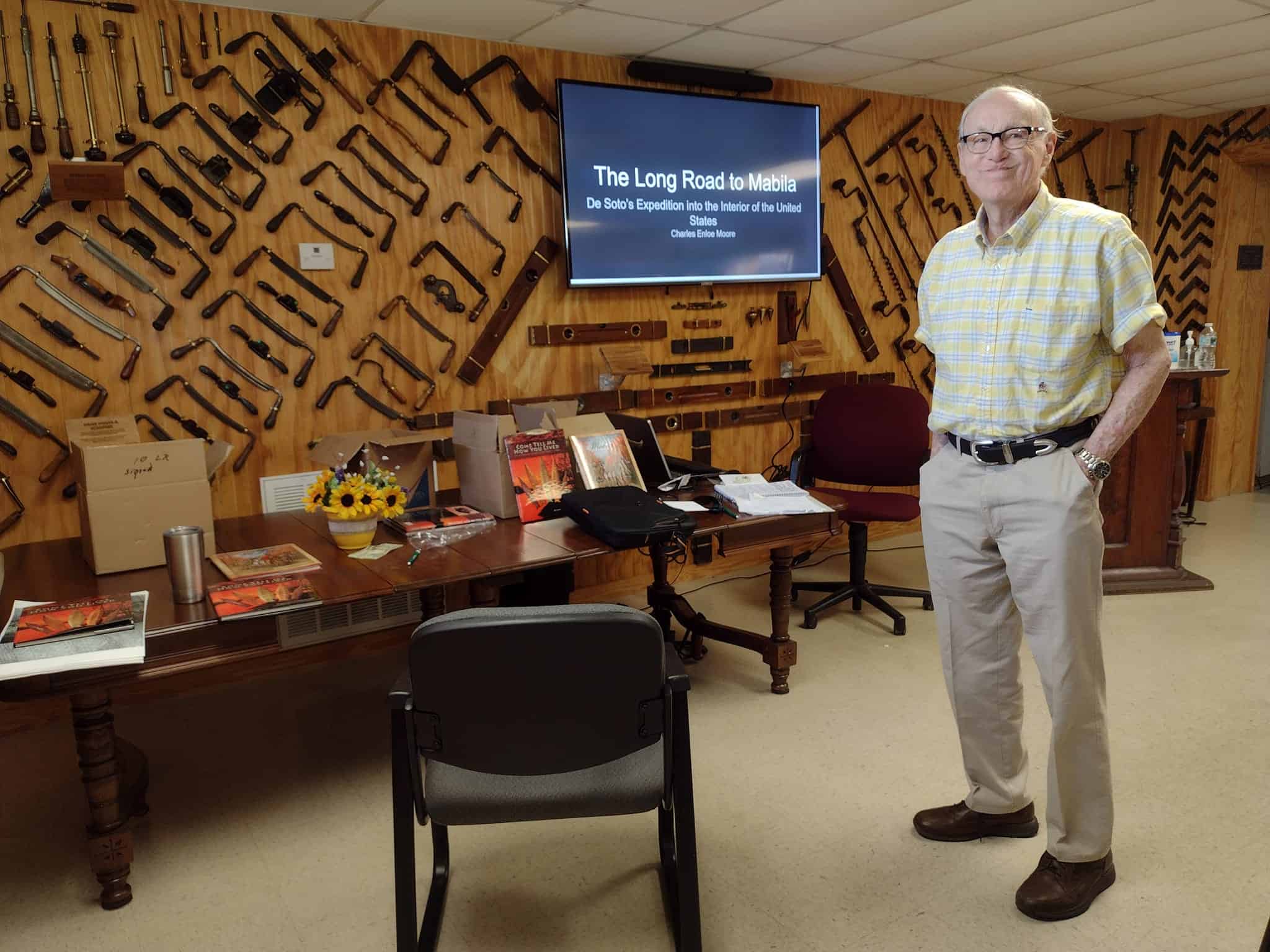
Moore was a guest author and speaker at the Pioneer Florida Museum & Village in Dade City, sharing his knowledge of the de Soto expedition. The expedition passed through the area of present-day Mulberry and crossed over a “Great Swamp” that is now known as the Green Swamp of Florida. Here, the Spaniards saw a vast wilderness of giant cypress trees draped with bromeliads and orchards that would remain undisturbed until the logging boom 300 years later in Florida.
De Soto’s journey also included crossing the Hillsborough River and traveling in a general direction that later became major highways and cities in Florida. The expedition encountered Juan Ortiz, a Christian native and a guide who helped them follow trails that later became major highways and visited places that became future cities in Florida.
Originally reported by Hernando Sun
Sources: Hernando Sun